

Imagine stepping into a classroom where cultural boundaries dissolve and learning is a universal language. This is the promise of the Postgraduate Diploma in Global Education—a key to transforming teaching practices and enriching our global society.
Meet the Minds Behind the Course
This Postgraduate Diploma in Global Education is guided and supported by some of the most respected names in the field of education. Their experience and leadership bring depth and credibility to the program.
Mr. Stephen Burnage –
A Fellow of the Chartered College of Teaching (FCCT) and the Royal Society of Arts (FRSA), Mr. Burnage brings a wealth of global insight. As a Principal Examiner in Educational Leadership with Cambridge University Press & Assessment, his endorsement adds strong academic value to the course.
Prof. (Dr) Sybil Thomas –
Currently the Principal of St. Andrew's College of Arts, Science and Commerce and a professor in the Department of Education at the University of Mumbai, Dr. Thomas lends her extensive academic and administrative experience to the program.
Dr. Sangeeta Nath –
As the Principal of Oriental College of Education in Navi Mumbai, Dr. Nath brings a passion for teacher education and curriculum development, enriching the course with practical knowledge and leadership.
Dr. Kalpana Chavan –
An Assistant Professor at St. Xavier's Institute of Education, Mumbai, Dr. Chavan has contributed to designing the course framework. Her academic expertise ensures that the learning experience is both relevant and impactful.
Designed for Flexibility
The PGDGE is structured to fit seamlessly into the lives of busy educators and professionals.
Duration: 1 year
Format: 100% Online
A perfect mix of live sessions (synchronous) for real-time interaction and self-paced learning (asynchronous) so that educators can study whenever it suits them best.
This flexible format allows educators to balance their professional commitments while gaining a globally relevant qualification from the comfort of their homes.
Connecting Cultures Within the Classroom
‘Education is the most powerful weapon which you can use to change the world.’- Nelson Mandela
In today's interconnected world, educators face the exciting challenge of equipping students to thrive in diverse global contexts.
The PGDGE equips teachers with the tools to foster an inclusive and culturally responsive learning environment. This course is more than an academic qualification; it is an invitation to reimagine education through a global lens.
Real-Time Teaching Practices: A Global Perspective
Consider a teacher in a lively international school, where students hail from every corner of the globe. In this vibrant educational tapestry, a lesson on world history evolves into a dialogue as students share their perspectives from diverse cultural backgrounds.
The PGDGE empowers educators to harness these diverse perspectives, transforming the classroom into a forum for global discourse.
The course emphasizes practical methodologies for integrating global issues into everyday teaching. Whether it's through project-based learning, international collaboration, or virtual exchanges, educators learn to design curricula that connect students to the world beyond their classroom walls.
This course is based on a comprehensive framework that equips educators to excel in a dynamic, globalized educational environment landscape.
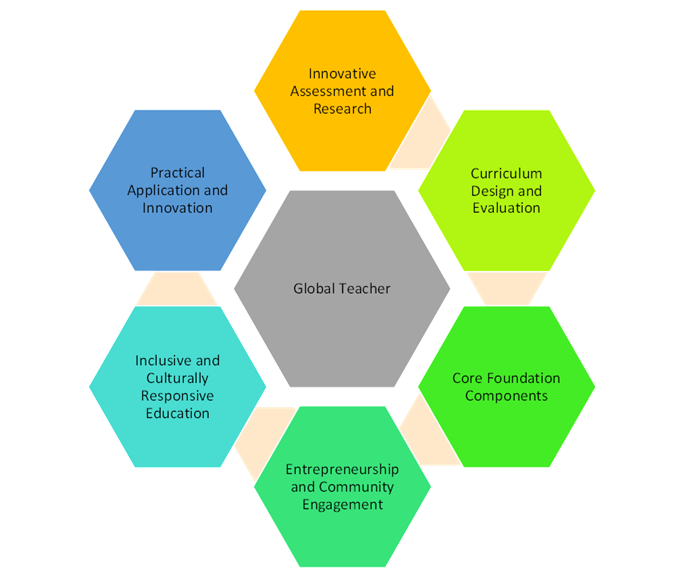
Inside The Assessment Journey of A Postgraduate Diploma in Global Education
The assessment pattern for a Postgraduate Diploma in Global Education incorporates various methods to evaluate participants’ knowledge, skills, and practical application.
Written assignments explore theories, policies, practices, and challenges in global education, while projects focus on designing, implementing, and assessing initiatives with a global perspective.
MCQ’s evaluate conceptual understanding, and oral presentations showcase research findings and project outcomes.
Practical fieldwork allows students to apply theory in real-world settings, complemented by portfolios that highlight their growth, reflective assignments that analyze personal learning, and group work that addresses global education issues.
Action plans are assessed for their feasibility and impact, while global competencies such as intercultural awareness and critical thinking are evaluated.
Discussions create a dynamic learning environment by fostering the exchange of diverse perspectives and solutions.
The Final Capstone Project represents the culmination of the course, enabling educators to apply their knowledge to a real-world research experience.
This project empowers teachers to tackle a specific research question within their educational setting by utilizing evidence-based practices to foster meaningful improvements. Educators will have the chance to identify challenges, collect data, implement strategies, and assess the effectiveness of their interventions.
Advantages for Educators
-
Enhanced Cultural Competence:
Gain a deep understanding of cultural dynamics and how they influence learning, preparing you to effectively engage with students of diverse backgrounds.
-
Innovative Teaching Strategies:
Explore cutting-edge pedagogical approaches that integrate global themes and digital tools, making learning both relevant and engaging.
-
Professional Growth:
Develop professionally to work collaboratively in both international and national schools.
-
Networking Opportunities:
Connect with educators worldwide, sharing insights and experiences that enrich your professional journey.
Cultivating Future Global Citizens
Education is not the filling of a pail, but the lighting of a fire." - William Butler Yeats
The PGDGE is not just an academic endeavor; it is a mission to ignite passion and purpose in teaching. By equipping educators with the skills to nurture global citizens, this course ensures that students are prepared to navigate and contribute positively to our rapidly changing world. In embracing this diploma, teachers become architects of a future where education transcends borders, creating a more understanding and harmonious global community.
Ready to revolutionize your teaching skills?
The PGDGE 2025 curriculum empowers educators to go beyond the basics, turning routine lesson creators into master chefs of education. With cutting-edge AI, innovative technology, inclusive strategies, and research-driven best practices, you'll craft lessons that truly inspire.
Are you ready to trade your apron for a chef's hat and become a world-class educator?
FAQ's
Q1. What is the Postgraduate Diploma in Global Education (PGDGE)?
The PGDGE is a specialised postgraduate qualification designed to prepare educators for global teaching standards. It focuses on modern pedagogy, global competencies, classroom innovation, assessment strategies, cross-cultural teaching, and future-ready skills required in international and progressive schools.
Q2. Who should pursue a PGDGE?
Ideal candidates include:
- B.Ed graduates
- Educators seeking career advancement
- Teachers moving into international or IB-oriented schools
- Career shifters entering education
- School leaders upgrading their pedagogical skills
Anyone aiming to teach with global standards benefits from this qualification.
Q3. How is PGDGE different from a traditional B.Ed.?
A B.Ed focuses on foundational teacher training for the Indian curricula. PGDGE focuses on:
- global teaching methodologies
- 21st-century competencies
- inquiry-based learning
- global citizenship
- differentiated instruction
- reflective practice
- International school expectations
It complements, not replaces, a B.Ed.
Q4. What career opportunities open up after completing PGDGE?
Graduates can pursue roles such as:
- Global educator / international school teacher
- Curriculum coordinator
- Instructional designer
- Learning facilitator
- Academic mentor
- EdTech trainer
- Teacher-leader roles
Many international schools prefer or recommend PGDGE-type qualifications.
Q5. Does a PGDGE help teachers move to international schools?
Yes. The program strengthens competencies widely required by global schools - inquiry-based instruction, assessment literacy, cross-cultural understanding, lesson design, and differentiated teaching. These skills significantly improve employability in global education environments.
Q6. What subjects or modules are typically included in a PGDGE?
Core learning areas often include:
- global pedagogy & inquiry models
- lesson planning and assessment design
- educational psychology
- classroom management & behavior science
- NEP-aligned pedagogy
- instructional strategies
- diversity & inclusion
- technology in education
- reflective teaching
The aim is to create a future-ready educator.
Q7. Is PGDGE recognised and valuable in India and abroad?
Yes. PGDGE holds substantial value for:
- IB schools
- Cambridge / IGCSE schools
- International K–12 institutions
- top private & global schools in India
- competency-based and inquiry-driven schools
Its global pedagogy focus makes it relevant across education systems.
Q8. Is PGDGE useful for teachers who already have classroom experience?
Absolutely. Experienced teachers benefit from:
- updated pedagogy
- global frameworks
- advanced assessment methods
- leadership-oriented skills
- modern instructional strategies
- exposure to contemporary educational trends
It enhances both expertise and career mobility.
Q9. How long does it take to complete a PGDGE?
Most PGDGE programs range between 9 to 12 months, depending on format and intensity. They are usually designed for working educators to manage alongside teaching responsibilities.
Q10. Can someone without a B.Ed. pursue a PGDGE?
Yes. Many PGDGE programs accept graduates from any discipline who wish to enter the teaching profession. It’s a valid pathway for career changers wanting to enter education with strong pedagogical foundations.
Q11. How does PGDGE help educators meet NEP 2020 and global teaching expectations?
PGDGE strengthens competencies aligned with NEP’s focus on:
- competency-based education
- experiential learning
- critical thinking
- cross-disciplinary pedagogy
- formative assessment
- technology integration
It also aligns with global teaching standards, preparing educators to be relevant locally and internationally.